B2B selling has changed shape. Most sellers are still holding the old one.
Selling has changed shape, and most sellers are still holding the old one. I said this to IBM Australia's sales team at their H2 Sales Kickoff this week, and I want to unpack it, because none of what's happening to buyers is them being difficult.
Aug 25, 2026
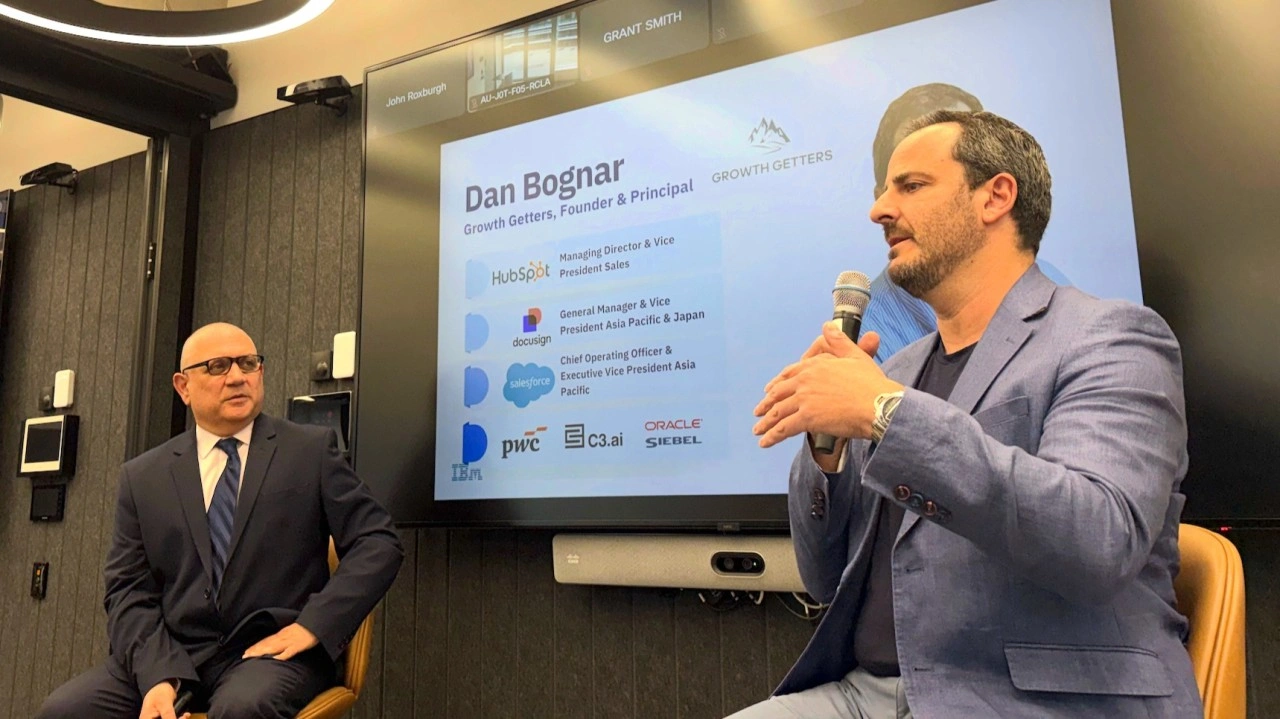
Selling has changed shape, and most sellers are still holding the old one. I said this to IBM Australia's sales team at their H2 Sales Kickoff this week, and I want to unpack it, because none of what's happening to buyers is them being difficult. It's a rational response to a world changing faster than anyone can validate a decision against.
Buyers are being asked to sign off on AI while privately wondering what it means for their own role. Geopolitical tension is injecting risk into supply chains that didn't used to carry any. Interest rates and tighter budgets mean every investment competes harder for the same shrinking pool of capital. And the pace of change means buyers can't rely on past experience to validate decisions anymore, the reference points they once trusted no longer apply by the time the decision is made.
Put simply - fear has replaced confidence as the dominant emotion in B2B buying, because the ground buyers stand on keeps moving.
Here's what makes it personal. Buyers aren't afraid of choosing the wrong vendor. They're afraid of being the wrong person for having made the decision at all. Personal career risk now outweighs organisational risk in most complex sales, because a decision that looked sound at sign-off can look reckless eighteen months later through no fault of the person who made it.
Organisations are afraid too, and they've built new machinery to prove it.
Extra sign-offs, security reviews, governance committees, procurement gates, AI risk assessments. Individually, prudence. Collectively, an organisation distributing the fear of a bad decision across enough approval layers that no one person is left holding it alone.
Your champion often doesn't know about these steps either, until they hit one late in the process. They've been navigating in good faith, telling you the deal is on track, and then a governance step nobody flagged shows up at the final hurdle and resets the clock. That's not your champion misleading you. It's a new committee they didn't know existed either.
This is why a mutual close plan matters more than ever. Not a CRM close date. An actual document, built jointly with your buyer, mapping every approver and gate between now and signature, revisited often enough to catch the ones that get added along the way. A close plan built once at the start is already stale by the final stage. Its job is to flush out the steps that weren't there when you started.
And every one of those steps has a person attached to it. Which means the fear you're managing isn't one fear. It's as many fears as there are people in the room.
The methodology you were trained on is now working against you.
Find the champion, build the relationship, let them carry your case upward. That's Challenger, that's MEDDIC and it's actively hurting you right now. Buying groups of 6 to 10 stakeholders are the norm, and your champion may not have the influence you think. A single dissenting voice you've never met can kill the deal.
If you can't say who holds the real veto, you don't have a deal. You have a rumour with a forecast attached.
The bigger problem isn't headcount, it's that each stakeholder fears something different, and one message to the group is a shortcut that costs you the deal. The CFO fears a business case that doesn't hold up in eighteen months. Security fears being the name on an incident report. The end-user champion fears championing something their own team resents using. Procurement fears being seen as the one who didn't push hard enough. None of them move on the same grounds.
Selling to a group now requires a distinct narrative for each stakeholder, what the decision means for them specifically. Your champion isn't just selling your solution upward, they're selling the legitimacy of the whole process to people with entirely different fears from their own.
Ask yourself, for your most worrying deal - can you name, in one sentence, what each stakeholder is personally afraid of? Most sellers can name the requirement each one cares about. Almost none can name the fear underneath it. That gap is where deals go quiet.
Your buyer stopped Googling. If you're still optimising for Google, you're optimising for an empty room.
B2B content strategy has run for twenty years on one assumption - a buyer searches, clicks through, and your content does its job at the point of highest intent. That's now no longer the case. Buyers are asking AI tools directly and getting a synthesised answer, no click, no web site visit. If your material isn't part of what those AI systems draw on, it doesn't matter how good it is. It never gets seen. Your buyer forms a view of the market entirely without you.
That's what AEO, Answer Engine Optimisation, actually is. It's not a new SEO tactic, but a different battleground, because the win condition has changed. SEO optimised for a click. AEO optimises for being the source an AI trusts enough to cite.
What's more, by the time a buyer contacts you, they've usually already formed a view of what good looks like and what they should expect to pay.
Here's what this means - the AI was the first voice in the room, not you.
That makes the first live conversation a validation exercise, not a discovery, and most sellers still walk in with a discovery pitch. Opening with "tell me about your challenges" to a buyer already briefed by AI announces that you don't know where this conversation actually starts.
The question every technology company should ask isn't "how's our website traffic." It's "when someone asks an AI about our category, are we in the answer, and is it accurate?" Right now, almost nobody in sales or marketing knows.
40 to 60 percent of deals aren't lost to competitors. They're lost to indecision.
Matt Dixon's JOLT research names something sellers feel but rarely say: the classic response to a stalling deal, more information, more proof, more urgency, only deepens the overwhelm causing it. JOLT flips that:
Judge the indecision instead of mistaking it for engagement.
Offer your recommendation instead of a menu of options.
Limit the exploration, since more discovery requests are often fear, not interest.
Take the risk off the individual, not just the company, through pilots and shared ownership of the outcome.
Silence is a selling skill. Most sellers have never been allowed to use it.
I once coached a rep through a six-figure deal that had gone quiet for weeks. Every instinct said send another deck, escalate it to their stakeholders, further commercial options. What unstuck it was one plain question, "what would need to be true for you to feel safe saying yes to your board?", followed by silence long enough to be uncomfortable. The buyer talked for four minutes. The deal closed two weeks later. What unlocked it wasn't more proof. It was room.
The best coaches don't hand people answers. They help people sit with uncertainty long enough to commit.
Stop asking "how do I convince this buyer?" Start asking "what is this person afraid of, and how do I help them feel safe enough to act?"
Fear reshaping risk. Hidden approval gates your champion hasn't seen yet. Buying groups with no shared fear to sell against. Invisibility in the AI answers buyers trust before they call you. Four shapes, one shift - the game has changed, and most sales organisations are still playing the old version.
Pick the one costing you most right now. Then find out what's actually happening underneath it, because "the deal is progressing" isn't an answer. It's a guess dressed up as a forecast.
Thank you Nicholas Flood Angelica Veness and Gabriel Tsavaris for the invitation to present to your team.